

Hi-ya Day
Finding the Gifts Hidden in Suffering

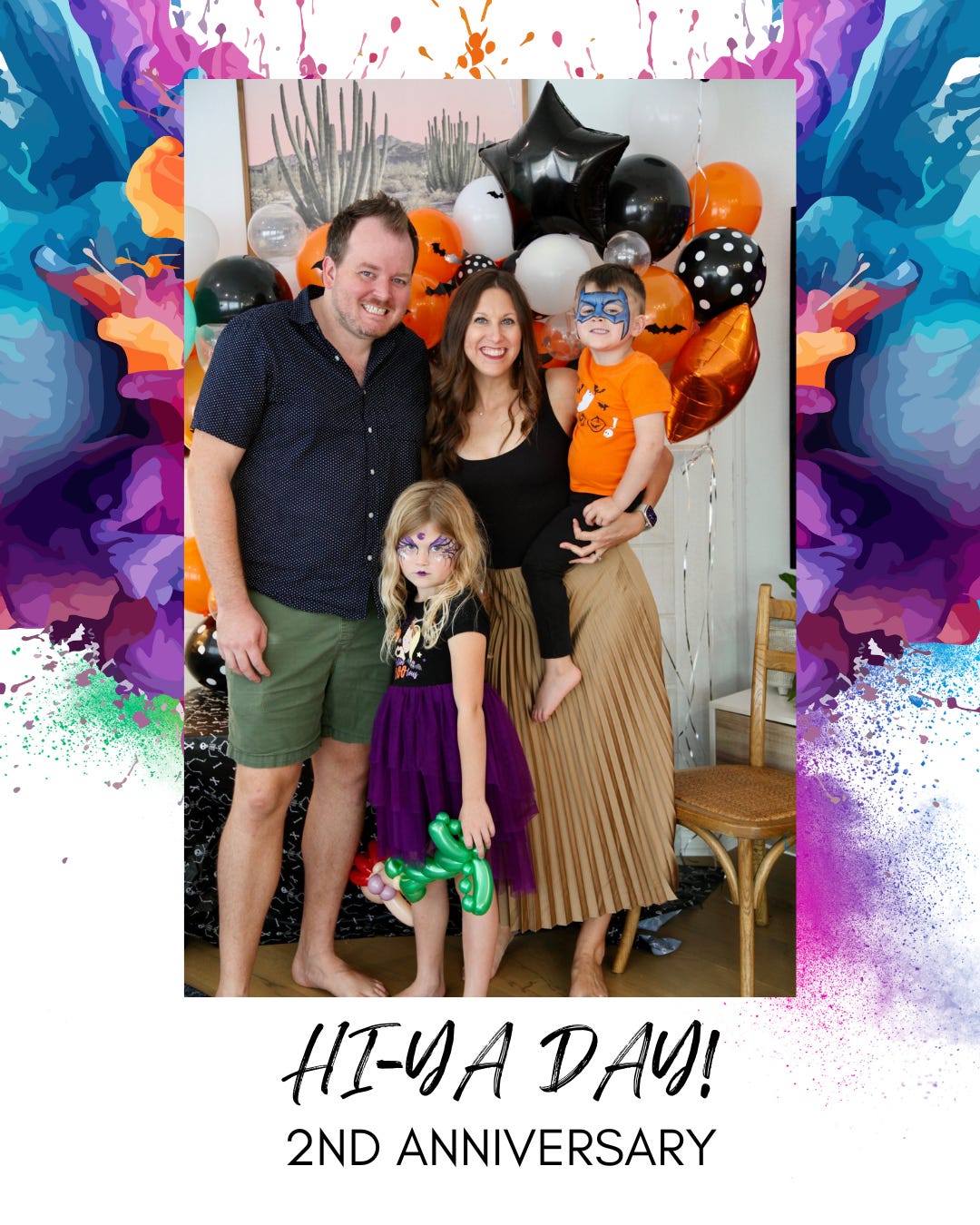
October 28, 2023 is a milestone day in our family’s story. My son was three, my daughter six, and our home was filled with laughter, balloons, and tears of relief. We were celebrating the victory that our sweet boy had defeated LEUKEMIA.
Rewind the story to July 31,2021.
That was the day we collapsed. Like most disasters, it was a sudden turn of events that changed our “normal,” stretched our endurance, and shattered our world.
That was diagnosis day.
Suffering’s Mark
I am sure you know this as well as I: suffering happens not just to individuals but to families. And from my life and research experience, suffering is the very thing we all have in common–something we all face in various ways. And the aftermath of suffering leaves a scar that often begins to define our life story.
Our neurochemistry doesn’t quite help us out here, because your brain is literally scanning at least 30x’s a second to ensure your survival, making it instinctual to think negatively. Add a layer of suffering to the mix, and those negative thinking cycles can become the unconscious background tune of our lives. The story begins to be reshaped by the pain, making it far harder to find the good in challenging spaces; taxing our heart to open when we fear tragedy might return.
This is normal.
I am normal. And you are too.
Suffering’s Gift
As implausible as it may feel to your instincts, suffering has gifts.
In his book, Gratitude Works, the guru gratitude researcher Robert Emmons writes:
“Certainly much harm can be done by telling people to simply buck up, count their blessings, and remember how much they still have to be grateful for. Processing a life experience through a grateful lens does not mean denying negativity. It is not a form of superficial happiology. It does mean realizing the power you have to transform a loss into a potential gain, recasting negativity into positive channels for gratitude” (Emmons, 2013, p.142).
Finding the good isn’t about denying pain—it’s about reframing pain.
The only path of suffering is THROUGH.
Neuroscience would say, “what you resist, you persist,” meaning the more you dismiss your feelings, thoughts, and are unable to observe the here and now, the longer your body remains in that space. Easier said than done, especially when suffering is something like ours: a 2.5 year treatment plan. This wasn’t going to be “over” anytime soon.
God’s Word echoes this truth in Romans 5:3-5, defining gifts of suffering that include growing perseverance, building character, and laying a foundation of hope. Hope and suffering—strange companions, but inseparable ones.
Our Meaning Making: Hi-ya Day
In our family, we’ve chosen to reframe our story—exactly as Emmons encourages—by recasting pain into gratitude.
Each year on this day, we celebrate…together. My son is now 5 years old and knows that his strength came from more than medicine—it came from community, prayer, and God’s hand. My daughter is wise enough to see that cancer left a scar on her too, and a scar that needs to be redefined, reauthored, and reclaimed. Same for us as parents.
Biblically, this is us raising our Ebenezar–a marker to declare victory of cancer, declaring goodness over our family story, and declaring we witnessed a miracle. A miracle that we are so grateful to have witnessed. Thank you Lord.
Take a Next Step
In leadership at home and at work, hardships come our way, but it is a work of courage to find meaning in those seasons and circumstances. So here’s some practical next steps you can do:
🧡Think of all the gifts have come out of your hardest challenges.
🧡Create your own form of a Hi-ya Day to celebrate milestones.
🧡Practice gratitude to rewire your brain toward hope.
My Gift to You
If this message resonates, I invite you to explore my Made for Joy series—a seven-week journey toward relational and emotional healing.
💫 Free Resource: As a Hi-ya Day celebration gift, you can access Week 7: Writing Your Joy Story for free.
👉 Click here to watch and download your lesson.
Because when we pause to name our miracles, we don’t just remember the pain—we reclaim the story.
Lastly, always feel free to connect with me. You can get my contact information on my website at www.relationalequipping.com.